Thank you for your interest and participation.
Please contact speakers and respondents directly for further discussion. Feedback to the event can be directed at any of the three organisers.
Organizers
Agnė Valatkaitė (Husserl Archives), Gregor Bös (CLPS and Husserl Archives), Luz Christopher Seiberth (Potsdam University)
Workshop Description
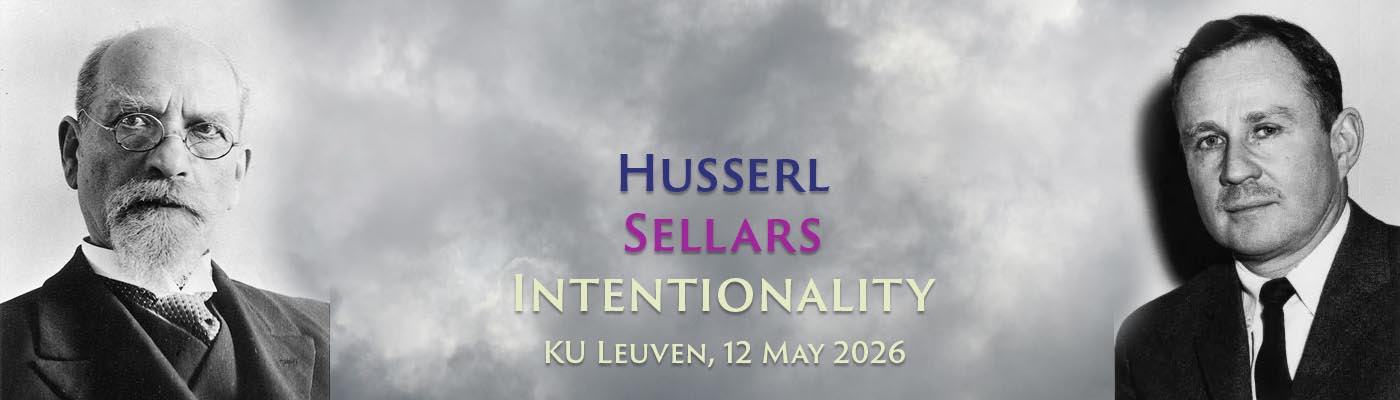
The workshop brings together two philosophical traditions that have had remarkably little to say to each other, given how much they share. Its guiding concern is to explore what the resources of Husserl's and Sellars' philosophies, taken together, can contribute to a theory of intentionality, the relationship of lifeworld and scientific theory, and what transcendental method still has to offer the philosophy of mind, including its more naturalistically inclined variants.
The format follows a Collective Research model. Junior researchers, mid-career scholars, and established figures are invited to pool their expertise rather than perform it. Those interested in commenting on paper drafts ahead of the event are welcome to write to agne.valatkaite@kuleuven.be.
Attendance is free but registration is required for in-person or remote attendance. The registration form is open until 11th May 2026.
Speakers
- Dr. Luz Christopher Seiberth, University of Potsdam
- Alexander Porto, Duquesne University, Pittsburgh
- Agnė Valatkaitė, KU Leuven
- Dr. Gregor Bös, KU Leuven
Respondents
- Prof. Dr. Emanuele Caminada, KU Leuven
- Dr. Stef Frijters, KU Leuven
- Dr. Sybren Heyndels, Charles University, Prague
- Prof. Dr. Julia Jansen, KU Leuven
- Enrico Sorrentino, University of Pisa
- Batoul Sukkar, KU Leuven
- Prof. Dr. Henning Tegtmeyer, KU Leuven
Finalized Schedule
10:00–11:30 First Discussion: Lifeworld and the World of Natural Science
10:00–10:30 Gregor Bös: Husserl's Lifeworld-Foundation of Science and Sellars' Grain Argument
10:30–10:40 Response by Sybren Heyndels
10:40–11:00 Discussion
11:00–11:10 Response by Henning Tegtmeyer
11:10–11:30 Discussion
11:30–12:00 Coffee Break
12:00–13:30 Second Discussion: Transcendental Methodology
12:00–12:30 Luz Christopher Seiberth: Accepting First Principles
12:30–12:40 Response by Julia Jansen
12:40–13:00 Discussion
13:00–13:10 Response by Batoul Sukkar
13:10–13:30 Discussion
13:30–14:30 Lunch Break
14:30–16:00 Third Discussion: Collective Intentionality
14:30–15:00 Alexander Porto: We-Intentions and I-Intentions
15:00–15:10 Response by Emanuele Caminada
15:10–15:30 Discussion
15:30–15:40 Response by Stef Frijters
15:40–16:00 Discussion
16:00–16:30 Coffee Break
16:30–18:00 Fourth Discussion: Origins of Meaning and Evidence
16:30–17:00 Agnė Valatkaitė: Grounding Material Inference: Varieties of Evidence and Subjunctive Robustness of Intentional Content
17:00–17:10 Response by Sybren Heyndels
17:10–17:30 Discussion
17:30–17:40 Response by Enrico Sorrentino
17:40–18:00 Discussion